The Power Elite
C. Wright Mills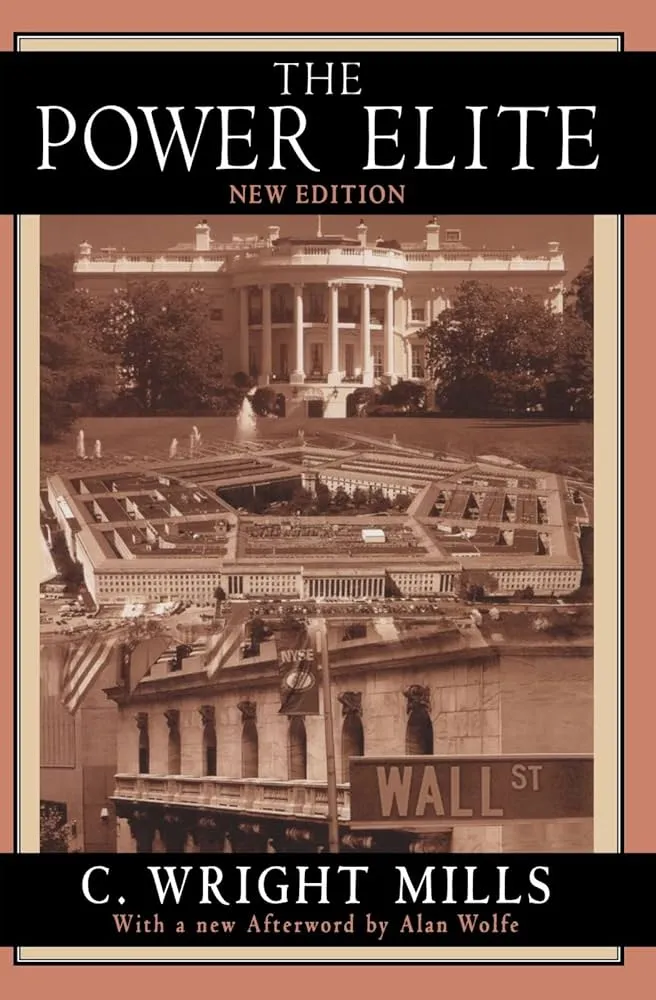
My 6 highlights
-
The way to understand the power of the American elite lies neither solely in recognizing the historic scale of events nor in accepting the personal awareness reported by men of apparent decision. Behind such men and behind the events of history, linking the two, are the major institutions of modern society. These hierarchies of state and corporation and army constitute the means of power; as such they are now of a consequence not before equaled in human history—
-
By the power elite, we refer to those political, economic, and military circles which as an intricate set of overlapping cliques share decisions having at least national consequences. In so far as national events are decided, the power elite are those who decide them.
-
Religious institutions provide chaplains to the armed forces where they are used as a means of increasing the effectiveness of its morale to kill. Schools select and train men for their jobs in corporations and their specialized tasks in the armed forces.
-
People with advantages are loath to believe that they just happen to be people with advantages. They come readily to define themselves as inherently worthy of what they possess; they come to believe themselves ‘naturally’ elite; and, in fact, to imagine their possessions and their privileges as natural extensions of their own elite selves.
-
Within each of the most powerful institutional orders of modern society there is a gradation of power.
-
Like wealth and power, prestige tends to be cumulative: the more of it you have, the more you can get. These values also tend to be translatable into one another: the wealthy find it easier than the poor to gain power; those with status find it easier than those without it to control opportunities for wealth.