Solidarity Is the Political Version of Love
Rebecca Vilkomerson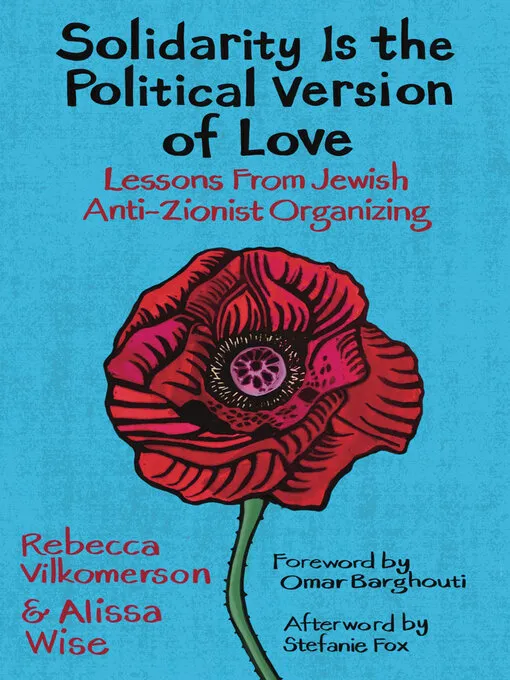
My 13 highlights
-
Ensuring an effective solidarity stance requires understanding your unique role and responsibility as part of the broader movement with whom you are in solidarity. As part of a movement ecosystem, different people join through different entry points, each element of the movement taking part where they can be most impactful.
-
organizing Jews by building a political home where people could find a warm embrace and avenues of expression of their Jewishness that are both familiar and liberatory, while also understanding the dangers of regarding Israel and Zionism as a source of Jewish safety and community
-
It’s relatively unusual for people to be willing or able to give up familial and communal comforts in order to live in alignment with their values. It is especially important, no matter the cultural entry point for your organizing, to create opportunities to engage in and continue that culture and participation in communal life for those that do make that choice
-
holding up the unconditional US support for Israel: Christian Zionism, Islamophobia, and the military-industrial complex, to name just a few.
-
One of the gifts that organizing offers is the chance not just to change oppressive conditions and policies today, to dream up and organize toward a different future, but also to be in relationship with our ancestors
-
JVP has been a structural hybrid between a movement and a traditional nonprofit organization—with a board, staff, and the governance and decision-making hierarchies that entails, entwined with a robust membership, chapter network, and constituency groups (such as rabbis, artists, and students)—that has driven its political trajectory
-
Undermining perceived notions of consensus is a critical part of discourse shift in all countercurrent-culture movement building efforts
-
Our most successful partnerships with
-
Queer people have a superpower, which is the will and experience to reimagine and re-create structures within our communities that exclude us
-
JVP’s organizing influences were multiple, as our active members, staff, and board brought with them pieces of their previous organizing formations and schools of thought, pulling from Paulo Freire, Ella Baker, Saul Alinsky, Dolores Huerta, and more
-
Especially because Jewish communal support for Israel was overwhelming, JVP recognized our role as just one prong in a multifaceted movement, led by Palestinians in the US and Palestine, with organizations proliferating to take aim at the other pillars
-
Palestinian organizations were with those with whom we shared values. How we articulated those values shifted over time, but they always included a commitment to transnational solidarity; an anti-oppression and anti-apartheid framework; and dedication to full equality and grassroots leadership of Palestinians, as well as liberating Judaism from Zionism
-
While well into the 1930s the majority of American Jews were anti-Zionist, the post-Holocaust milieu inspired fierce organizing on behalf of Israel, with the impact of the Nakba for Palestinians deliberately denied by the most established and well-resourced organizations that found their initial missions evolving as Jews found affluence and comfort in American life. Especially after the 1967 war, when Israel conquered the occupied West Bank (including East Jerusalem and its Old City) and Gaza, support for Israel became a litmus test for almost the entire Jewish community and its institutions.