One Day, Everyone Will Have Always Been Against This
Omar El Akkad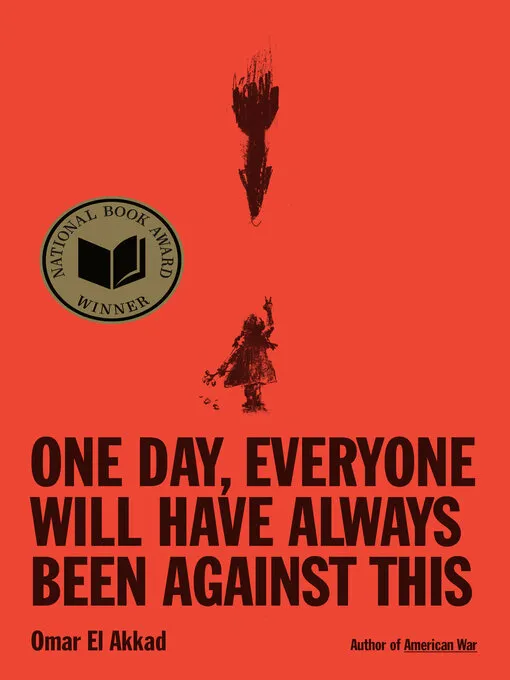
My 40 highlights
-
This is an account of something else, something that, for an entire generation of not just Arabs or Muslims or Brown people but rather all manner of human beings from all parts of the world, fundamentally changed during this season of completely preventable horror. This is an account of a fracture, a breaking away from the notion that the polite, Western liberal ever stood for anything at all.
-
I think about this entourage now, as I watch Ambassador Thomas-Greenfield at work. I imagine the driver and the town car that whisks her elsewhere. I imagine an office, a suite of offices, littered with assistants and secretaries and the living accoutrements of institutional power: coffee that appears by magic, missives dictated, the small annoyances of daily living taken care of by a fleet of underlings so that this person, this deeply important and yet instantly replaceable person, can go about the work of being ushered into a wide-open room to sit at a large curving desk ahead of a sign that reads United States and raise her hand as instructed to veto a toothless resolution calling for an end to genocide. I imagine the quiet insides of that town car, before and then after this person has followed the orders she must follow. I wonder whether, in that momentary silence, watching through the window as the scummy world of the everyday living floats by, deeply unimportant, this person might wonder, even briefly, if this is what she wanted for her life. And then I watch an interview with a Palestinian child who is asked what she misses most and answers: Bread.
-
It is an admirable thing, in a politics possessed of a moral floor, to believe one can change the system from the inside, that with enough respectful prodding the establishment can be made to bend, like that famous arc, toward justice. But when, after decades of such thinking, decades of respectful prodding, the condition one arrives at is reticent acceptance of genocide, is it not at least worth considering that you are not changing the system nearly as much as the system is changing you?
-
To be accused of speaking too loudly about one injustice but not others by someone who doesn’t care about any of them is to be told, simply, to keep quiet.
-
And yet there is a deranged honesty about the cult to which the likes of Pence—and former South Carolina governor Nikki Haley, who signed her own message, “Finish them!,” to similar bombs—belong. American liberalism demands a rhetorical politeness from which the fascistic iteration of the modern Republican Party is fully free. There is something stomach-churning about watching a parade of Biden administration press secretaries offer insincere expressions of concern for Palestinians as the same administration bankrolls their butcher.
-
It’s impossible to do the work of journalism, or at least serious journalism, and not be forced to make some kind of peace with the reality that you will be, many times over, a tourist in someone else’s misery. You will drop into the lives of people suffering the worst things human beings can do to one another. And no matter how empathetic or sincere or even apologetic for your privilege you may be, when you are done you will exercise the privilege of leaving.
-
Anyone who buys into both the narrative of American rebelliousness and the reality of American authority understands that both have been created to serve them. The man in the action movie looks one way, the man the cops just shot in a traffic stop another.
-
In a 2016 essay, the writer and former soldier Roy Scranton describes watching Star Wars while stationed in Baghdad. He is forced in that moment to confront the reality that so much of the American self-image demands a narrative in which his country plays the role of the rebel, the resistance, when at the same time every shred of contemporary evidence around him leads to the conclusion that, by scope and scale and purpose of violence, this country is clearly the empire. A central privilege of being of this place becomes, then, the ability to hold two contradictory thoughts simultaneously. The first being the belief that one’s nation behaves in keeping with the scrappy righteousness of the underdog. The second being an unspoken understanding that, in reality, the most powerful nation in human history is no underdog, cannot possibly be one, but at least the immense violence implicit in the contradiction will always be inflicted on someone else. I’ve seen this person many times—they occupy a hallowed place in American culture, catered to by so many of the nation’s dominant cultural forces, from Monday Night Football to the Country Music Awards to the entirety of AM radio. It’s the person who in self-image professes to be a rule-breaker, untamable, wild—and in the next breath sides unquestioningly with every facet of state power. I’ve seen the Punisher decal on the bumper, the stylized American flag denoting the thin blue line: I’m an outlaw; also, anyone who disobeys the cops deserves to be killed.
-
I think about what Neil Sheehan once wrote in A Bright Shining Lie, about the difference between British and American approaches to empire—that the former felt compelled to civilize those they considered savage, a personal calling of sorts, a point of pride. The latter, on the other hand, had no use for any such notion. A strange thing, to be here, in this place, this moment, watching both costumes of empire thrown on at once.
-
During the time I reported from Egypt, I had started work on American War. In one scene in the book, the United States, amid complete institutional collapse, is visited by the president of a new pan-Arab empire. The president delivers a speech venerating the two nations’ shared desire for basic democratic rights. Years later, after I sold the manuscript, one of my editors returned the section to me and suggested it would hit harder if the speech itself were not so transparently insincere, if it seemed the head of this empire had at least some belief in the platitudes he was espousing. I had copied the text, almost word for word, from Barack Obama’s 2009 speech in Cairo, the one titled “A New Beginning.”
-
reality, not a single Western politician or party, not a single government anywhere in the world, can be expected to change when constantly rewarded this way. The argument in favor of voting for the lesser evil is frequently made in good faith, by people who have plenty to lose should the greater evil win. But it also establishes the lowest of benchmarks: Want my vote? Be less monstrous than the monsters
-
A chasm has developed, these last few months, one of many but one that cannot be bridged. On one side is a portion of society that fears nothing more than the discontinuation of normalcy. That believes, regardless of what horror each new day brings, what matters most is to live as one had lived before, answering emails and meeting deadlines and maintaining productivity. On the other is that portion which, having witnessed the horror, is simply unable to continue as before. How does one live, hearing the screams, bearing witness to the bodies? How does anything else matter? The fear of some comfort disappearing collides with a different fear—a fear that any society whose functioning demands one ignore carnage of this scale for the sake of artificial normalcy is by definition sociopathic. Often, I watch discussions on social media in which someone asks: What radicalized you? In response, others will point to various moments of mass violence at the hands of the state, blatant cases of injustice, moments such as this one where it becomes clear there exists a massive gap between the empty statements of the powerful in support of justice and the application of actual justice. But the word “radicalize” feels wrong, seems to imply an element of extremism, as though rage at this kind of blatant hypocrisy is the abnormal thing, when what is plainly abnormal is to accept it.
-
Rules, conventions, morals, reality itself: all exist so long as their existence is convenient to the preservation of power. Otherwise, they, like all else, are expendable.
-
Either hundreds of millions of people have always been predisposed to the lure of the fascist, in which case the entire democratic endeavor is doomed anyway, or something of corporate liberalism has brought us here. Whatever the quality of its rhetoric, any politics that buckles at the prospect of even mildly inconveniencing the rich, or resisting an ally’s genocidal intentions, will always face an uphill battle against a politics that actively embraces malice. “Yes We Can” is a conditional. “Yes We Will” is not.
-
There’s a convenience to having modular opinions; it’s why so many liberal American politicians slip an occasional reference of concern about Palestinian civilians into their statements of unconditional support for Israel. Should the violence become politically burdensome, they can simply expand that part of the statement as necessary, like one of those dinner tables you lengthen to accommodate more guests than you expected. And it is important, too, that this amoral calculus rise and fall in proportion to the scale of the killing, so that one might always be able to say, “Well, we could never have known it would get this bad, but now, now everything has changed.”
-
I remember once sitting on a panel at a literary festival that began with an organizer doing a bit of housekeeping. First and foremost, he told the audience, it is important that we acknowledge we are on unceded Indigenous land…and thank the hedge fund that has generously sponsored this event. It might be one of the most unintentionally honest land acknowledgments I’ve ever heard.
-
This is the crux of it, the unavoidable reckoning. Every morning countless well-paid, well-educated foot soldiers in the employ of the Democratic Party wake up and decide on the day’s talking points. Every morning a small army of spokespeople step to the lecterns and deliver statements about how much the president cares for innocent lives, or the immense effort the United States makes to minimize unnecessary suffering, or whatever it is that needs to be said that day so as to launder the evil done between the last press conference and this one. A growing number of people ask a different question; the world asks a different question. The world, full of people who factor not one iota in the calculus of those morning meetings, looks upon this and asks, simply: Beyond self-interest, what do you believe in? And every morning the answer, dressed up in anesthetic euphemism and dependent on our collective capacity for resignation to the lesser of two evils, is: Nothing.
-
Earlier the same day, demonstrators shut down the bridges into Manhattan. As with all such acts of disobedience, the usual cavalry of talking heads emerges to note that these protests only inconvenience people, and that inconveniencing people is not an effective way to change their minds. Never is this logic applied to the past, to the demonstrations that shut down bridges to call for an end to segregation, for example. Because if applied to a moment already deemed righteous in hindsight, such an argument would be shown immediately for its spinelessness. But for now, it’s fine. For now, a motorist made late for work or a colonizer’s portrait disfigured provokes more of a political response than any number of dead foreign kids can.
-
It is a reminder that, in times like these, one remarkable difference between the modern Western conservative and their liberal counterpart is that the former will gleefully sign their name on the side of the bomb while the latter will just sheepishly initial it.
-
Outside, dozens of our relatives stand waiting, people I love similarly and who love me and with whom, in another life where we never left, I would have shared the normal bonds of family. Instead, they appear to me now as foreigners, because we did leave.
-
Interviewing one of Uber’s earliest executives, who demonstrated the company’s route-finding algorithms with the unbridled enthusiasm of a small child at Christmas, I couldn’t help but think what this company had really innovated was not some brilliant new solution to the traveling salesman problem, but the establishment of a new, lower norm of employee treatment. Success, growth, profit came from taking what might at one time have been decent, stable jobs and rebranding them as side hustles. The brilliant business idea was persuading people to expect less.
-
One night, I go to a party at the home of an old friend from Qatar who had been sent to Montreal by his father ostensibly to continue his education but instead has made quite a decent living for himself selling crack. One of the people there, aggressively enthusiastic in that way only certain men between the ages of seventeen and twenty-two become when they first stumble onto the work of William Burroughs, says to me with complete conviction that Naked Lunch is the finest novel ever written, and that I know nothing of life until I read it. There’s a man in that book who’s being consumed by his own asshole, the young man says to me, very seriously, do you understand? Do you understand the meaning? I nod.
-
I was twenty-five years old and for months I had been pestering the Globe’s foreign editor to give me an assignment, any assignment. I wanted desperately to be in the world, telling stories of consequence—stories that, had you not read about them in my articles, you wouldn’t have read at all. This seemed to me then, and still does now, the only kind of journalism any journalist should want to do. Everything else, to paraphrase the common saying about meetings and emails, could have been a press release.
-
More and more, daily life seems to invert. The very consequential work of figuring out taxes and filing stories and handing students their essays back becomes utterly trivial. When I’m offered a book deal, my friend asks how we’re going to celebrate, and for a moment I genuinely believe he’s joking.
-
It is not simply the case that, seeing this kind of thing up close, one is made to contend with some new, terrible degeneration of the West, a corruption of its ideals or stated ethical orientation. It is that, upon seeing this, time and time and time again—in beautifully catered awards ceremonies celebrating apartheid, and in the killing fields of Gaza, and in the blunt knowledge that the two are not all that disconnected—one cannot help but realize that there has been no degeneration, no corruption. That so far as the West stands in historical reality, nothing has evolved, nothing has become more enlightened, nothing has been learned. It has always been this way.
-
A Guantánamo Bay military courtroom is a sanitized place. The reporters sit behind the glass, in a separate room, with an audio feed on delay that can be muted in case someone says something the judges deem classified.
-
The barbarians instigate and the civilized are forced to respond. The starting point of history can always be shifted, such that one side is always instigating, the other always justified in response.
-
and anyway, I’ve been gone so long from the country of my blood that there’s really no point, no connection left.
-
A few days after the ICJ decision, Nancy Pelosi floats the theory that some of the people who are calling for a ceasefire have Russian ties. Later she’ll add China to the mix—the real source of this phantom treason of not much concern, in the grand scheme of things. The carefree quality of the accusation, the ease with which it can be lobbed, is as powerful as the accusation itself. Anyone who came to the West from the places where such charges are commonplace recognizes it immediately. In the country of my birth, where, as of this writing, inflation rages somewhere around 130 percent and a substantial portion of the population doesn’t have enough to eat, everything is the fault of an insidious plot hatched by Israelis and Americans, by the West, by some outsider jealous of Egypt’s potential or intent on its destruction. It’s a prized tool in almost every failed regime’s workshop. It’s a source of great disillusionment, to see it so casually repurposed by a democratically elected Western politician.
-
What power assumes, ultimately, is that all those who weren’t directly affected by this, who only had to bear the minor inconvenience of hearing about these deaths from afar, will move on, will forget. Tomorrow more Palestinians will die, but in the places where the bombs are built and launched it will have no bearing on mortgages, bills, employment. Indeed, in many of these places, what will have a real economic effect is if the bombing stops.
-
The reality is that an ally of the West is killing civilians by the tens of thousands and it would be politically inconvenient to call this wrong now when for months, years, decades it has been deemed perfectly fine.
-
I am reminded of what the actor Helen Mirren said of her time in Israel in 1967: “I saw Arabs being thrown out of their houses in Jerusalem. But it was just the extraordinary magical energy of a country just beginning to put its roots in the ground. It was an amazing time to be here.”
-
It’s not surprising, I don’t think, that in the midst of this indiscriminate killing, many of the Westerners doing the most active work in opposing genocide are Jews. Here is love born of pain, of the past century’s most horrific crime, love of one’s own spread outward into love of another. Whatever the empire is, it has no idea what to do with this kind of love, which adheres neither to the empire’s own central principle of self-interest nor to the adjoining principle that solidarity is only with one’s own, that love for one’s people may never become love for another.
-
One of the hallmarks of Western liberalism is an assumption, in hindsight, of virtuous resistance as the only polite expectation of people on the receiving end of colonialism. While the terrible thing is happening—while the land is still being stolen and the natives still being killed—any form of opposition is terroristic and must be crushed for the sake of civilization. But decades, centuries later, when enough of the land has been stolen and enough of the natives killed, it is safe enough to venerate resistance in hindsight.
-
Daily we are told there is nothing better than this. Our graphics cards and loafers arrive at our doorsteps the same day we order them—what more is there to want? We hurtle from shock to shock, bubble to bubble, oriented in the direction of complete ecological collapse and a future mortgaged beyond any hope of repayment. Yet we are told the most frightening thing is not this building chaos, but rather the possibility that any other course might end in secret police and breadlines.
-
When The Guardian runs a headline that reads, “Palestinian Journalist Hit in Head by Bullet During Raid on Terror Suspect’s Home,” it is not simply a case of hiding behind passive language so as to say as little as possible, and in so doing risk as little criticism as possible. Anyone who works with or has even the slightest respect for language will rage at or poke fun at these tortured, spineless headlines, but they serve a very real purpose. It is a direct line of consequence from buildings that mysteriously collapse and lives that mysteriously end to the well-meaning liberal who, weaned on such framing, can shrug their shoulders and say, Yes, it’s all so very sad, but you know, it’s all so very complicated.
-
It’s come to shape the way I think about every country, every community: Whose nonexistence is necessary to the self-conception of this place, and how uncontrollable is the rage whenever that nonexistence is violated?
-
The worst and most successful war reporters I meet are all very confident.
-
once chased a story about a group of Uyghurs, a Muslim minority long subjected to heinous abuse by the Chinese government. Fleeing this persecution, a few Uyghur men are picked up by Pakistani bounty hunters and sold to the Americans, who eventually ship them off to Gitmo. From early on, everyone involved comes to the conclusion that these men pose no threat at all, had simply been in the wrong place at the wrong time. Still, for years they languish on the island. They cannot be sent to China, where they will almost certainly be imprisoned and tortured, and they cannot be sent most anywhere else, since China threatens to make life politically miserable for any nation that takes them
-
The defining emotion, as it has been for months, is bewilderment: What is wrong with me that I can’t keep living as normal? What is wrong with all those people who can?