Because a Diet Coke can had exploded in my backpack, I also had a new bag: a canvas army surplus bag, with a shoulder strap.
“Hello,” said Juho, who was standing on the cat-themed doormat. “I saw that your lights were on, so I thought I would knock at your door. But I decided to space the knocks very far apart, and then decrease the interval, to see how close the knocks have to be together, before they are perceived as knocking.” Riley gave me a look. “I’ll be inside,” she said.
There were two grad students, Burcu and Ulaş, who sometimes came to the club meetings to circulate petitions about the Armenian genocide. They were really stressful people—not just about the petitions, but about everything. You could see exactly what their parents were like.
Lakshmi and I were on a shuttle bus to Woods Hole. Who were these dour New Englanders? The shiksas and the ice queens, presumably, and their more numerous male counterparts. One of these he-shiksas, a balding man who looked exactly like my psychiatrist—was it possible he was my psychiatrist?—criticized me for talking too loudly. “You do realize that your voice is booming through the entire bus,” he said. Since it had been framed more as an observation than a request, I decided to counter it with one of my own. “It’s a bus, not a library,” I said.
I wanted to write a book about interpersonal relations and the human condition.
“A feminine textual body is recognized by the fact that it is always endless, without ending: there’s no closure, it doesn’t stop, and it’s this that very often makes the feminine text difficult to read,” wrote Hélène Cixous, in a sentence that could definitely have been shorter. I didn’t get it: why did we have to write stuff that was hard to read and didn’t have an ending, just because men were wrong?
Everyone had been assigned to a different psychologist. Mine talked in a little-girl voice, and told me that when she thought of Turkey she imagined camels, and asked if I had to wear a veil when we went there.
Anyway, how could therapy even work on me, when I was so far from sharing Svetlana’s therapist-like belief that people should be healthy and well-adjusted, that they should go to bed at the same time every night, even if they were reading or having an interesting conversation, or that it was great and life-affirming to go hiking with some guy, or to get married?
Someone had put on an Ella Fitzgerald CD. It produced a grown-up, New York–like, somehow Christmassy atmosphere that felt at odds with who Ella Fitzgerald was. She herself surely hadn’t inhabited such spaces, at least not until she became a famous singer.
My hair resembled the nest of an unknown bird prepared to hatch its nestlings.
I asked what Juho’s project was. First he said something about trying to “build a clavichord.” Then he said he was teaching his computer to recognize the concept of a chair.
What should a person’s attitude be toward Picasso? As a child, I had felt bullied by him. In photographs, bald, aggressive, bull-like yet boyish, he had reminded me of Jerry. It was the boyishness that was sinister. I felt he was trying to take something that rightly belonged to children—one of the few things we had—and keep it for himself. The bullied feeling was connected to the way you had to choose between either the art teacher, who said that Picasso was a genius, or the kind of people who only liked photorealistic paintings of cars. I would side, under such circumstances, with Picasso, but I wasn’t happy about it.
In the end, I thought the most likely explanation was that most of the people in the world just didn’t know they were allowed not to have kids. Either that, or they were too unimaginative to think of anything else to do, or too beaten-down to do whatever it was they thought of.
Lucas said that The Rachel Papers was funnier, and he thought I would like it. I was pleasantly surprised to learn that Lucas had any idea of me at all, let alone one that I could learn more about by reading a book.
According to my watch, three hours had passed. My memory seemed to be missing some time. At some point, he had said something about his roommate, and asked if I wanted to take a shower. Taking stock of the situation, I realized there was nothing I needed so much as a shower. It was like a foreign country, nothing in there but an almost empty thing of Head & Shoulders, radically unlike the shower that I shared with three girls, where you were always having to make room for the rain-forest shaving gel between the custard-apple shampoo and the apricot exfoliant. The towel, too, was different. Coarse, gray, in no way objectively superior to our towels—to the contrary—it nonetheless emanated a kind of protective strength that gave me a longing feeling. What would it be like if that was your towel? As a child, you learned that all the soft, colorful things were for girls, and at that time I had felt lucky. But this coarse gray towel . . . had I been duped?
I found it in the library catalog—Prozac Nation: Young and Depressed in America. “In America” was also annoying, as if everything that happened to you was somehow about America.
Dora recounted to Freud how Herr K had ambushed her from behind a door and kissed her. Freud said that a normal virginal girl of fourteen would have felt a “healthy genital sensation” to learn that such an honorable and attractive man was in love with her. Instead, Dora had an unhealthy, choking response in her throat.
Something about the name “Proust” sounded fussy, and made me worry that he wouldn’t have liked me.
Back in Antalya, I sent off my last batch of copy. I hadn’t skipped anything in my itinerary, nor had I had a nervous breakdown. Failure had not, of course, been conclusively eluded. My flight to Moscow was in three days. There, I would have to locate the geneticists, whose address included, troublingly, a street number, a “corpus” number, a building number, and an apartment number.
The architect’s house was a long, low box made of wood and glass. Everything about it seemed evocative and expensive, except the dog, which looked less like a dog than like a panicked homunculus that had been crammed into an ill-fitting shaggy suit. Malin opened the glass sliding door and the dog sailed out over the dunes and started doing everything at once: peeing and frolicking and scrabbling in the sand. There was the ocean, like a recurring character you forgot about for long stretches.
When I asked why it was good that Dilek had had a baby, I was told: “But if she hadn’t had Erol, we wouldn’t have Erol.” I didn’t have anything against Erol; he was a baby. But hadn’t everyone gotten along fine without him?
Every week in creative writing, we read two short stories: one by an actual writer, and another by one of us. The published stories were usually OK, but everything we wrote was awful. Why did we have to talk about it? All the suggestions felt random and performative. It was like we were all looking at a malformed sweater and saying, Maybe it would be better if it was a different color, or if it was actually made of ice.
At first, I couldn’t understand why nobody but me and Lakshmi wanted to sit on the outer deck. Then, the ferry started to move and we bowed our heads before the life-annihilating wind that gusted over the surface of the Atlantic. Lakshmi, undaunted, hunched over and somehow lit a cigarette inside her suede coat. When she stood up again the wind whipped the cigarette out of her hands and it immediately disappeared.
The subjects that most excited her—how Star Wars had the same narrative arc as The Iliad; how, if you looked up “fix” in the Oxford English Dictionary, the different definitions “subverted” each other—while not exactly uninteresting, were things I had nothing to say about. Once or twice, I made up some kind of opinion and said it anyway. It felt both boring and depressing.
The last screening was starting in two minutes, and it was a gender-transgressive docudrama about a prostitute in war-torn Belgrade who had a special way of bringing peace to the Balkans: “by acting as a kind of lightning rod for the erotic desires of violent men.” Although I had some interest in war-torn Belgrade, I didn’t want to show up alone, late, and out of breath, to a movie about violent sex.
In the past, my goal in conversation had been to accurately represent the things that I thought, and to deploy these thoughts in relation to the things that other people said, while exercising caution to not betray ignorant or antisocial ideas, and the whole thing had been so much to think about that in the end I usually hadn’t said anything at all. Svetlana had pointed out that, if I actually listened to other people, instead of worrying so much about what I was going to say, I would notice that everyone was saying all kinds of antisocial, ignorant, or irrelevant things, which were often just a posture they were trying out, as opposed to a reflection of their essential personality, which was probably a thing that didn’t even exist. I hadn’t believed her, but she was right: nobody was actually answering anything anyone else had said, and people were constantly betraying antisocial ideas.
Later, in Hungary, other people had asked the same question—“What other countries have you been to?”—in the same tone; implying that leaving the country wasn’t a sign of privilege, but a kind of accomplishment.
It turned out that I could ask the guys whatever questions I thought of, and they would answer.
We agreed that Susan Sontag was not funny.
We started kissing again. How smooth, how easy it felt. Suddenly, I started worrying that it was too easy, that I was being too passive and was failing to be interesting or express my personality. Magazines always said stuff like that: “Don’t just lie there.” I tried to think of different things I could do. There didn’t seem to be that many things. He started to laugh. “Maybe go a little easy with the tongue,” he said. I felt encouraged: so you could request pointers. “Does a person have to be interesting?” I asked. He didn’t answer. “Just relax,” he said finally. I never had liked being told to relax.
The longer I lived, the more evident it became that going out and getting drunk were the things people cared the most about. They thought you were putting on an act if you said you were more interested in anything else.
In my heart I didn’t see the need for a backpack. Wouldn’t I be better off with a suitcase? Especially now that suitcases all had wheels. People never even talked about that anymore, and acted as if it had always been that way. Yet, all through my childhood, everyone had been yelling, “You’ll hurt your back!” and wrenching suitcases out of each other’s hands, in an effort to personally be the one who hurt their back.
There was something about crying so much, the way it made my body so limp and hot and shuddering, that made me feel closer to sex. Maybe there was a line where sex and total sadness touched—one of those surprising borders that turned out to exist, like the one between Italy and Slovenia.
I sometimes went with Svetlana to Pilates—even though the logistics of mat placement was deeply stressful, in a way that made me feel like I understood the primal conflicts for land that formed the basis of modern history.
The futon in the common room was covered in the batik cloth that Priya draped over everything—as if it helped. Riley and Priya were at lab. I wasn’t sure where Joanne was, but Joanne was so quiet, and so often asleep. As I was thinking admiringly of Joanne’s ability to fall asleep anywhere, I saw to my astonishment that she was actually asleep under the table, a few feet away, in what I had thought was an empty sleeping bag.
At first it seemed like I might have time to tell her about Kierkegaard, but I had barely gotten started when our classmate Gavriil came in. Gavriil had a wiry build and fluffy hair resembling that of Mozart in the movie Amadeus, and was always climbing things. You might look at a library or a church and see something on the wall, and it would be that guy, Gavriil. “Check it out,” Gavriil said, proudly unzipping his backpack. It was full of broccoli and cabbage. “Looks like you have some healthful vegetables there,” Svetlana said.
“Ah, I was hoping I would see you,” Juho said, when I went over. “I am always forgetting to give you this.” After unzipping his giant backpack, he handed me something plastic and crinkly: a bag of the Finnish candy called Turkish peppers. These tarry black lozenges tasted powerfully of licorice and salt, and gave you a feeling of having inhaled swimming-pool water. I wasn’t sure what was Turkish about them, or why they were considered desirable, yet I already wanted another one.
A famous Soviet bard died. All the Russian instructors were depressed. I saw Galina Fyodorovna crying in the photocopier room. The bard had been an emblem of the Moscow street culture of children, particularly on one famous street. In his honor, all the Russian students had to memorize poems by Pushkin. This made sense according to Russian people’s logic, where everything always connected to Pushkin.
I felt relieved when I got to the library: a soundless concrete cube, with a spiral staircase through the middle.
Still, I found the idea of an aesthetic life to be tremendously compelling. It was the first time I had heard of an organizing principle or goal you could have for your life, other than making money and having kids. Nobody ever said that that was their organizing principle, but I had often noticed it, when I was growing up: the way adults acted as though trying to go anywhere or achieve anything was a frivolous dream, a luxury, compared to the real work of having kids and making money to pay for the kids.
Lewis was sitting right in the middle of the futon with his arms outstretched over the back, looking way more at home than I felt, even though I lived there. Most of his discourse consisted of alternately hostile or flattering remarks directed to or about Priya.
He released my hand, so I could do it by myself, but it turned out I wasn’t doing it right. He demonstrated: more vigorous, more rhythmic, harder, slower. At first, I wanted to do a good job, but I soon grew demoralized. It felt like I was missing too much information. Couldn’t he do a better job himself? What was the point of delegating it to someone who would do a worse job? A twinge of pain shot through my palm. What if I got repetitive strain injury again, like with the gardening catalog? As I was wondering how to diplomatically phrase my concerns, the thing happened that I had often seen symbolized in movies by geysers or fountains or a lawn irrigation system. But this was such a helpless little spurt, it seemed so young, like a new spring plant. I couldn’t help feeling touched. He pulled a Kleenex from a box wedged between the bed frame and the wall. Kleenex, not toilet paper: a class act, I thought, because part of me was always generating a commentary.
Listening to Svetlana talk, I fluctuated between believing that something really good had happened to her, and experiencing a profound sense of alienation. She described the intense relationships that she had formed with boring-sounding freshmen through trust exercises, games, and activities that had been devised, over the years, for just this purpose. She didn’t seem disturbed, as I would have been, by the idea that it was an experience designed for you, to make you feel a certain way.
I understood the point of faking an orgasm. Clearly, he wasn’t going to stop what he was doing until something changed. But it wasn’t quite right, and I didn’t know how to direct him. It was like hearing a sound in the forest and not knowing which way it was; and, even if I had known the direction, it would have taken too long to get there—it seemed to be taking longer, lately—and I would have worried that he was bored or uncomfortable, and even if I could have known that he wasn’t bored or uncomfortable, I wouldn’t have been able to bear such intensity and tension without knowing how and when and whether it was going to end.
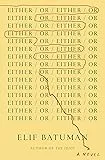
Unsurprisingly, the back of Either/Or didn’t say which kind of life was better. All it said was: “Does Kierkegaard mean us to prefer one of the alternatives? Or are we thrown back on the existentialist idea of radical choice?” That had probably been written by a professor. I recognized the professors’ characteristic delight at not imparting information.
Svetlana’s housing block ended up having six Orthodox Jewish guys in it, because Svetlana had been in a Moral Reasoning section with the alpha Orthodox guy, Dave. The two had merged their blocks together, like a dynastic wedding.
The more I thought about it, the less I understood why the duration of my current condition—this indignity and stuckness, the feeling of being somehow tied to Ivan—should depend on my ability to find some doofus who would tell me I was special. I already knew I was special. So what did I need the doofus for?
How alone a person was normally, walking down a street, trying to choose between different businesses. It wasn’t the most glamorous part of life, or the one that was most often discussed, but it was so constant, like a heartbeat, like the waves: the question of where and how to spend the money that had been wrung from the world at such cost.
There was a part where Lauryn Hill rapped a verse, with her friend Rashia. The most interesting parts were about their own technical competence—their style. “My style is indeed one of the foulest,” one of them said. “I inhale large clouds of smoke through my chalice.” I had a thought that was so surprising that I stopped in my tracks. Was it possible that Zoloft would cause me to like rap music?
I looked at him closely, trying to judge if he was some kind of asshole.
When I told the doctor that my parents were also doctors, he acted like it was the greatest news he had heard in his life.
I watched the people moving around the room in different configurations. What were they even doing? Not exactly dancing, or talking. They were “partying.” People talked about it as if it was an honorable, prestigious activity.
gotten started when our classmate Gavriil came in. Gavriil had a wiry build and fluffy hair resembling that of Mozart in the movie Amadeus, and was always climbing things. You might look at a library or a church and see something on the wall, and it would be that guy, Gavriil. “Check it out,” Gavriil said, proudly unzipping his backpack. It was full of broccoli and cabbage. “Looks like you have some healthful vegetables there,” Svetlana said.
That night, the twins had a double date with some local fetishists and said we could use their hot tub.
It turned out that Ukrainians, just like Turkish people, and Russians, and many people in Hungary, considered their culture to be uniquely “torn between East and West.” How many cultures didn’t think that? I had once heard a Japanese person say it about Japan.
I said I thought it would be more efficient to just ignore society and dumb men. Lakshmi said that, according to French feminist theory, you couldn’t ignore the men, because their views on women were baked into culture at such a deep level. Just by using words, you were perpetuating their ideas, because they were the ones who had made up language.
It was actually disturbing, how much of Swann’s Way was about trying to fall asleep.
In the Chance class, we read an interview with John Cage where he said that the most profound music to him now was the honking of cars on Sixth Avenue. This was because he no longer “needed” the structure and overbearingness of “what we call music.” “If something is boring after two minutes,” Cage wrote, “try it for four . . . then eight. Then sixteen. Then thirty-two.” I sighed. Only someone who was already old and famous could say something like that—that some randomly occurring garbage was the greatest art form. I couldn’t go around being like, “Here’s the sounds of Sixth Avenue. Oh, it doesn’t sound interesting to you? Try it for thirty-two minutes.” Nor did I want to.
“Shall we get out of here?” he said in a suave, euphemistic-sounding tone. I nodded. I always wanted to get out of here, and nobody ever asked.
I was trying to run through the possibilities at the same rate as external developments. I knew that the first time you had sex was supposed to be with someone special who cared about you. I also knew that, even if it wasn’t your first time having sex in your whole life, you weren’t supposed to do it with any particular person on a first date. Since I had never had sex before, and hadn’t been on even one date with this guy, indications were I should not let him have sex with me, if that was what he was trying to do, on this, our zero date.
We went together to the women’s self-defense training session. A giant ex-convict wearing a space suit pretended to mug you. That was his job, now. It was demonstrated to us how we should knee him in the balls while screaming, “No.”
I stood up, more abruptly than I had intended. “I have to go,” I blurted. Everyone looked at me, so I added: “I just remembered a book I have to read.”
The possibility that lots of people my age were, unbeknownst to me, taking antidepressants made me think of the book Prozac Nation, which had come out when I was in high school. Anything with “nation” or “generation” in the title already seemed to be hectoring a person—about how “we as a nation” didn’t, for example, “deal with our problems” anymore, choosing to just pop a pill. By “deal with our problems,” they meant, “suck it up.” I disliked people who said “suck it up.” On the other hand, I also disliked laziness, and it had been impressed upon me many times that we were on a slippery slope to a situation where everyone was in an incubator being drugged to not think for themselves, like in Brave New World. I wasn’t sure which of those two things the book was going to be—hectoring, or incubator—but either way I hadn’t felt like reading it.
Of course, you couldn’t have a party without alcohol; I understood this now. I understood the reason. The reason was that people were intolerable. But wasn’t there any way around that?
Was that poem good? It sounded like a Nine Inch Nails song. Was Nine Inch Nails good? I felt annoyed when people showed you a photograph of a urinal and tried to make you debate whether it was art. Nonetheless, I wanted to know whether a poem was good.
She was wearing perfect neutral makeup and kept talking about the genius of Johannes Kepler. “That’s the genius of Johannes Kepler,” she said, more than once.
Even in shopping week, accelerated Russian already met for the full two hours. Everyone complained, but I was secretly pleased. I didn’t like when people acted as if nothing we did was time-sensitive. “You have a lot of time, you don’t need to be in a hurry.” That’s what the deans said, when you tried to take five classes. Easy for them: they were already deans.
Writers, Leonard said, were not normal people. As a writer, you were never totally present. You were always thinking of how you would put a thing into words. You were constantly putting yourself on the line, and constantly being rejected. You betrayed the only people who really loved you. For this reason, the most honest advice anyone gave about becoming a writer was that, if you were capable of doing absolutely anything else, you should do that thing instead. I didn’t get it. Wasn’t everyone capable of doing something else? How was that a test of whether you should be a writer?
Ivan, too, had expressed rhetorical anger at abstract concepts, and seemed to think in terms of being worthy and unworthy.
Ezra’s basketball friend, Wei, said that he had been teaching a section on the lambda calculus, and one freshman had hung around afterward, apparently yearning to get something off his chest, before finally blurting: “When do we learn about the lamb?” Wei spoke rarely, but always said something interesting.
The Ukrainian Research Institute was in a wooden colonial house, with offices in the different rooms. About a third of the people who worked there were actually Ukrainian, and seemed always on the verge of being really upset. If anyone said “the Ukraine,” instead of “Ukraine,” or assumed that some word in Ukrainian was the same as in Russian, or asked whether a Ukrainian writer wrote in Russian, it was enough to push them over the edge. This kind of touchiness was familiar to me from Turkish people, and gave me a fond, protective feeling.
I audited a few meetings of an ethics seminar taught by a famous philosophy professor from Oxford. He had wire-rimmed glasses and wild white hair, and used a lot of overhead transparencies, usually putting them on upside-down or backward. The transparencies were charts and graphs, about the quality of life for different populations.
Nobody acted like the suffering of Dilek or the baby, which was clear to anyone who spent even five minutes with them, had invalidated in any way the celebratory view taken of her marriage and pregnancy.
The books I enjoyed were usually long, containing descriptions of furniture and of somebody falling in love, and often had ugly nineteenth-century paintings on the cover.