My Brilliant Friend
Elena Ferrante, Ann Goldstein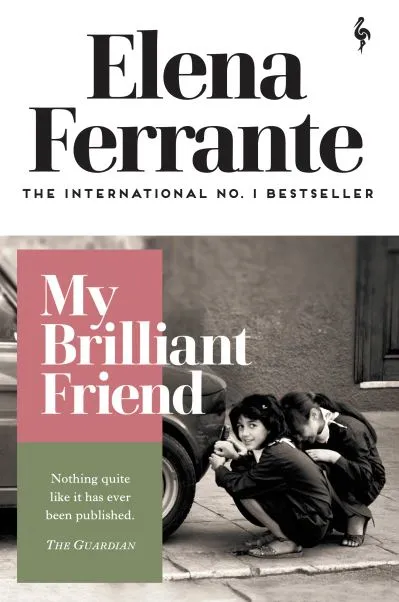
My 8 highlights
-
Marisa threw her arms around my neck with an enthusiasm I would never have expected: in all those years I had never, absolutely never, thought of her, while she said she had often thought of me with great nostalgia. When she alluded to the days in the neighborhood and told her parents that I was the daughter of Greco, the porter, Lidia, her mother, made a grimace of distaste and hurried to grab her little child to scold him for something or other, while Donato Sarratore saw to the luggage without even a remark like: How is your father.
-
In other words, the last ten days of July gave me a sense of well-being that I had never known before. I felt a sensation that later in my life was often repeated: the joy of the new. I liked everything: getting up early, making breakfast, tidying up, walking in Barano, taking the road to the Maronti, uphill and down, lying in the sun and reading, going for a swim, returning to my book.
-
He took me along Corso Garibaldi, to the building that would be my school. He dealt in the office with extreme good humor, he had the gift of congeniality, a gift that in the neighborhood and at home he kept hidden. He boasted of my extraordinary report card to a janitor whose wedding witness, he discovered on the spot, he knew well.
-
She spoke to me as if she were my mother and as if my mother, the real one, with the injured leg and the wandering eye, were only a disposable living being, and as such not to be taken into consideration.
-
After his long swims Donato lay beside me to dry in the sun and read his newspaper, Roma, the only thing he read. I was struck by the fact that someone who wrote poems, who had even collected them in a volume, never opened a book. He hadn’t brought any with him and was never curious about mine.
-
It was during that journey to Via Orazio that I began to be made unhappy by my own alienness. I had grown up with those boys, I considered their behavior normal, their violent language was mine. But for six years now I had also been following daily a path that they were completely ignorant of and in the end I had confronted it brilliantly. With them I couldn’t use any of what I learned every day, I had to suppress myself, in some way diminish myself
-
I spent the summer lethargically, in the courtyard, at the ponds, generally with Gigliola, who often talked about the young university student who came to her house to give her private lessons and who, according to her, was in love with her. I listened but I was bored.
-
Was it possible that only our neighborhood was filled with conflicts and violence, while the rest of the city was radiant, benevolent?