The Lords of Discipline
Pat Conroy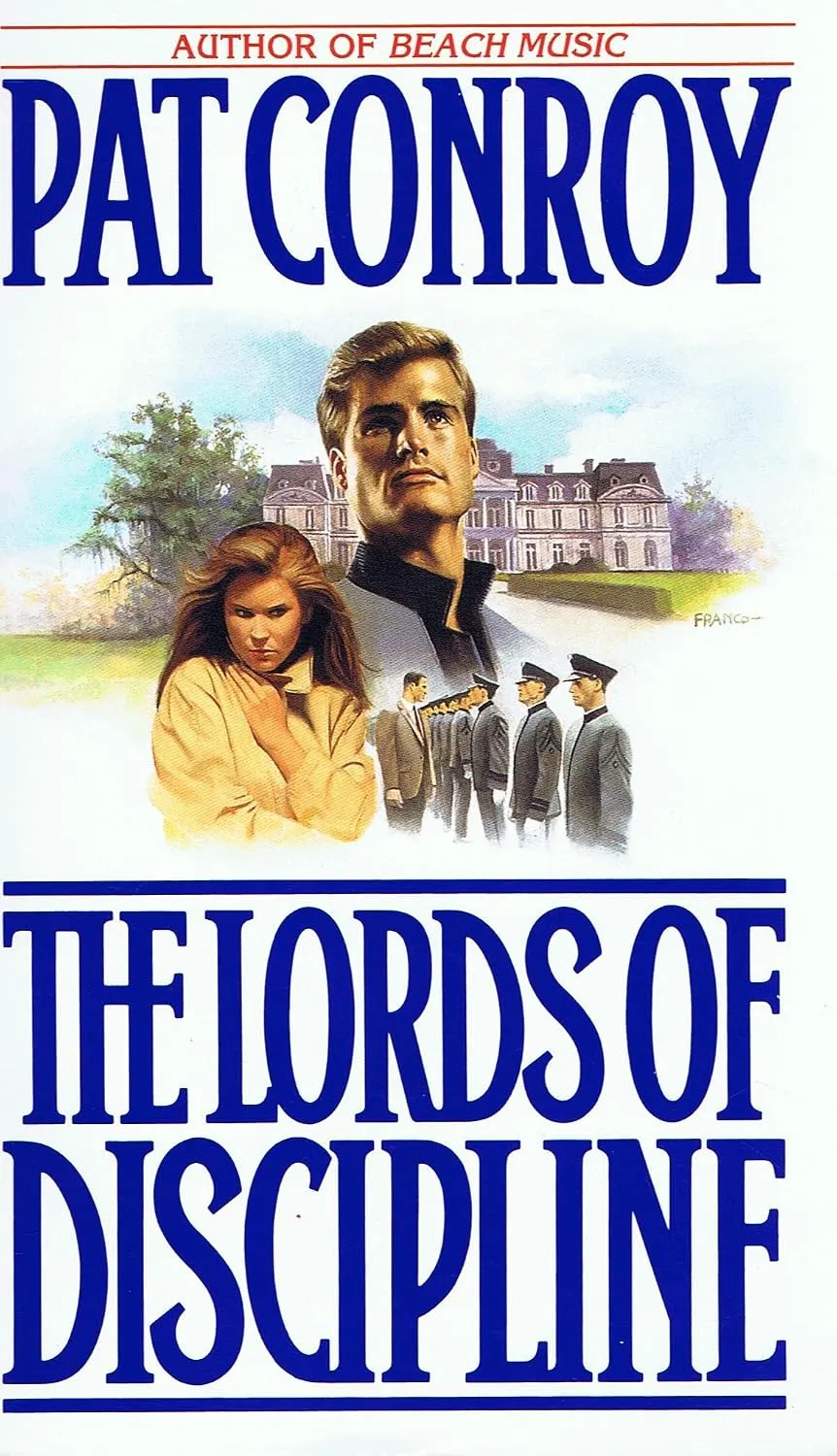
My 14 highlights
-
Humidity staggered the city throughout the summer. Walking the streets of Charleston in the late afternoons of August was like walking through gauze or inhaling damaged silk.
-
would march singing and eager into every battle with the name of the Institute on our lips. There was something lyric and terrible in the fey mindlessness of Southern boys, something dreary and exquisite in the barbaric innocence of all things military in the South. The Institute, romantic and bizarre, was the city of Charleston's shrine to Southern masculinity.
-
Because of his obesity, it was easy to forget that Reynolds was a remarkably handsome man.
-
At first, the war stimulated enrollment and conferred a sense of mission on the school, a stature and an eminence it did not enjoy during those rare times when the United States was not trading the blood of its sons for the blood of other, darker, sons. Nothing made the college prouder than the death of a graduate in combat. We kept a tally of those fallen heroes and felt that we were in direct competition with the service academies as to who would have the most graduates killed in Vietnam.
-
They had taught me about power and the abuse of power. Evil would always come to me disguised in systems and dignified by law. There would always be cadres and shower rooms, and they would always have dominion over me. They had taught me to hate them, but more significantly, they taught me that I was probably just like them, that I would abuse power whenever I had it, that I was the enemy of anyone who found himself beneath my boot.
-
Distrusting the approval of the chosen, I would take the applause of exiles anytime. My friends were all foreigners, and they wore their unbelongingness in their eyes. I hunted for that look; I saw it often, disarrayed and fragmentary and furious, and I approached every boy who invited me in.
-
At that time I only knew that I did not see things exactly as my classmates did. Something was different about me, and I suffered because of that difference. But I did know this: In my senior year I was beginning to learn how to discriminate between an idea that was for me and one that was for all the rest. And I was beginning to understand in a visceral inchoate way that every single thing I had been taught or had learned on my own since I was a child contained the elements of a lie. The whole construct of my universe was a cunning, entangled network of lies. I had to start over again. I knew that. And I had to begin by ceasing to loathe myself for my difference from the rest.
-
“You don’t look like you’re feeling very well, Commerce,” I said. Commerce always seemed enshrouded in a nimbus of unhealthiness. He was a short, wiry, rodent-faced man who even in repose had a motor running somewhere, as though his heart was working for no particular reason.
-
I walked back across the parade ground beneath the shadows of the massive oak trees on the southern fringe of the parade ground and the two howitzer cannons, Barnwell and Freeman, named for the two Institute cadets who fired the first shots on Fort Sumter to begin the Civil War.
-
Restless and on the prowl, I had entered my young manhood tired and desperate to be done with these sexless days, though sexless is not completely accurate. Cadets become clandestine but brilliantly imaginative masturbators of a very high order. Show me a product of a military school and I will show you a man who can beat off without moving a muscle, without rustling a sheet.
-
“I should have known better than to engage the Irish swine in a battle of words. But I would like to remind you of one indisputable fact, Mr. McLean. If you study history long enough with the diligence and passion it requires, you will come to recognize that the truly great men in history have been men of girth. Greatness does not often come in puny, fashionably slim packages. A great mind cannot be served by anything other than a massive body. Mark my words well. Only a fool would dispute such an assertion.” “I believe it, sir,” I said. “And I can only assume from that theory that you must be among the greatest men in history.”
-
The rest of South Carolina has a keenly developed inferiority complex about Charleston, a complex that Charlestonians feel is richly deserved. Unlike other cities in the region, including Savannah and Columbia, Charleston never had to endure the full fury of an assault by the armies of William Tecumseh Sherman. Charleston survived the Civil War with her architectural legacy intact and her collective unconscious simmering with aggravated memories of bombardment, reconstruction, and emancipation as she struggled to become whole again. The war succeeded in making an odd city odder, and it often seems as if Charleston still feels the presence of a phantom Armada holding the city under a perilous eternal siege. In Charleston, more than elsewhere, you get the feeling that the twentieth century is a vast, unconscionable mistake.
-
His body was a work of art forged through arduous repetitive hours with weights. It was not the type of body I admired—the long fluid muscles of swimmers hold more esthetic appeal for me—but it had a magnetic, almost nuclear, tension. His upper torso was breathtaking, his chest muscles, his shoulders, all were simply extraordinary. He did not play football; his love affairs were with the weights, with boxing and wrestling, with karate, with all sports that hurt seriously.
-
If looks alone could make generals, Durrell would have been a cinch. He was built lean and slim and dark, like a Doberman. A man of breeding and refrigerated intelligence, he ordered his life like a table of logarithms. Normally, he spoke slowly and his modulation had an icy control to it, but I had witnessed many times when he had caught fire and when he did, when he arrived at a subject that consumed him, then you could see the eyes change, not the color, but the light behind the eyes, which flared whenever an article of his unwavering faith arose in a speech or a conversation. During speeches to the Corps, the indisputable power of his own rhetoric would affect him so viscerally that he would dance along a thin, precarious edge of control in constant danger of plunging headlong into much darker and more radical passions. When praising the nation or the nobility of the founding fathers’ vision, we had known him to break down almost completely, not to weep of course, but to falter, his voice breaking, his emotions poised unsteadily in a miraculous duet between virility and tears. It was the only hint that there was fury beneath the form.