This Arab Is Queer
Elias Jahshan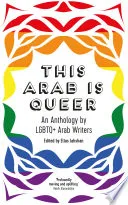
My 4 highlights
-
When I was twenty-eight, I became – finally – sexually intimate with a person other than myself. That sounds like an awful lot of words to say, ‘lost my virginity’ or, ‘had sex for the first time’ but I lost nothing – it was fucking wonderful – as I had already been masturbating and enjoying the orgasms I gave myself. To say ‘had sex for the first time’ sounds like Christopher Columbus ‘discovering’ a country that existed long before he set sail. I have determined to retire those phrases I used to use once and for all.
-
While I was not ready to say I was bisexual, I did start to call myself queer – I considered my polyamory to be a form of rebellion and resistance to heteronormativity.
-
Another piece of writing that has helped me understand and articulate queer theory is an essay by Susan Song titled ‘Polyamory and Queer Anarchism: Infinite Possibilities for Resistance’.4 ‘The term “queer” implies resistance to the “normal”, where “normal” is what seems natural and intrinsic,’ writes Song. The essay discusses queer theory, compulsory monogamy (emphasis hers) and why anarchists in particular might critique it as a relationship form. Song defines polyamory (in a way that I agree with) as ‘the practice of openly and honestly having more than one intimate relationship simultaneously with the awareness and knowledge of all participants’. She goes on to say how ‘The open and honest aspect of polyamory points to anarchist conceptions of voluntary association and mutual aid. Polyamory also allows for free love in a way that monogamous state conceptions of sexuality don’t allow.’
-
We construct our queerness, don’t we? Mine doesn’t look like yours. My friend explains that a queer space is one where you don’t have to explain yourself. But I find myself explaining myself to myself. Is my mind not a queer space? Is my body?